

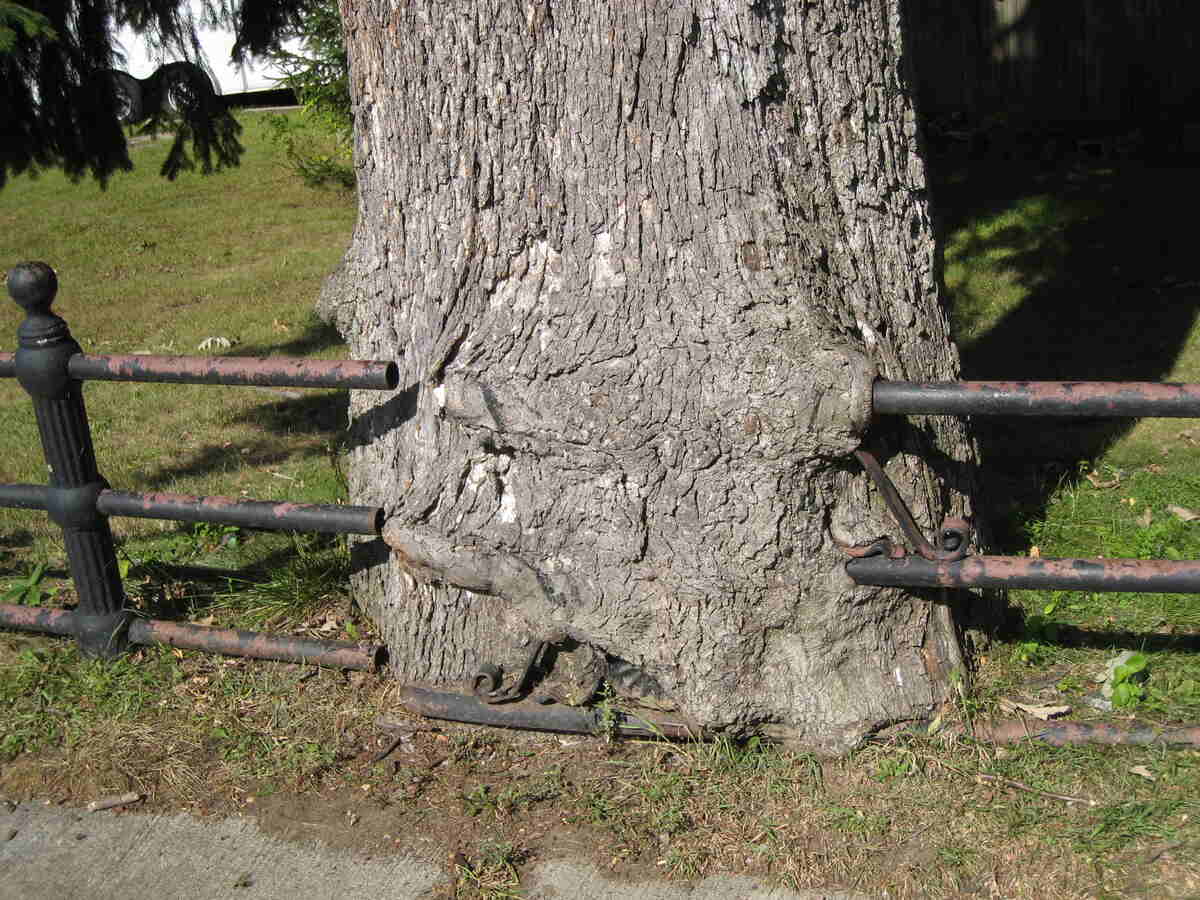
 Trees and fences often share
How Trees Damage Fences
Root pressure. As roots grow
Trunk growth. Trees planted
Falling limbs. Dead, weak, or
Moisture and debris. Dense
Sap and staining. Some trees
How Fences Damage Trees
The relationship works both
- Cutting roots while digging
post holes can weaken a tree’ s stability and health, especially if large structural roots are severed. - Compacting soil with
equipment and foot traffic over the root zone reduces oxygen and water reaching the roots. - Pouring concrete close to the
trunk restricts root growth. - Attaching fence rails or wire
to trunks damages bark and leaves the tree vulnerable to disease as it grows around the fastener.
Damage to a tree may not show
A few strategies protect both
- Adjust post spacing. Shift
post locations to avoid large roots, even if that means a slightly shorter or longer span in that section. - Dig by hand near trees. Hand
digging lets you find roots before cutting them. Small roots can usually be cut cleanly, while large ones should be avoided. - Bridge over roots. Where a
large root crosses the fence line, span it with a longer rail or a raised section instead of digging through it. - Leave room for growth. Keep
fences a reasonable distance from trunks so the tree can widen without pushing against boards. - Choose lighter footings. In
sensitive root zones, gravel- set posts or alternative anchoring may cause less disruption than large concrete footings. - Never fasten to the tree.
Build the fence around trees rather than using them as posts.
For large or valuable trees,
Ongoing Maintenance
Once a fence and trees share
- Trim branches that overhang
the fence or rub against it, and remove dead limbs before storms do it for you. - Clear debris from the base of
the fence so leaves and needles don’t hold moisture. - Watch for leaning posts that
may indicate root pressure, and adjust them before the whole section moves. - Clean moss and mildew from
shaded boards with a gentle, wood-safe cleaner. - Refresh stain or sealer more
often on heavily shaded sections, which stay damp longer.
When the Tree Belongs to the
Boundary trees and
- Homeowners can commonly trim
branches that overhang their side of the property line, as long as they don’t harm the overall health of the tree. - Damaging or killing a
neighbor’s tree can carry significant liability. - When a healthy tree falls in
a storm, insurance often treats it differently than when a tree that was visibly dead or dangerous falls. - Shared fences and boundary
trees are best handled through early conversation and written agreements.
Talking with neighbors before
Repairing Tree Damage
When roots or limbs have
- Root-lifted posts may need to
be relocated a short distance away rather than reset in the same spot. - Sections pushed by trunk
growth can be rebuilt with a gap or notch around the tree. - Storm damage from limbs
usually means replacing broken boards, rails, or posts and removing hazardous branches above. - Persistent damage may signal
that the fence line itself needs rethinking, or that a problem tree should be assessed by an arborist.
Not every homeowner wants to
Choosing Fence Styles That
Some fence designs coexist
- Open styles like split rail,
picket, or ornamental metal allow air circulation and dry out faster in shade. - Board-on-board or shadowbox
fences let some air through while still providing privacy. - Metal posts resist rot in
damp, shaded soil. - Removable panels make future
tree work and root maintenance easier.
Let Both Grow
Trees and fences can share a